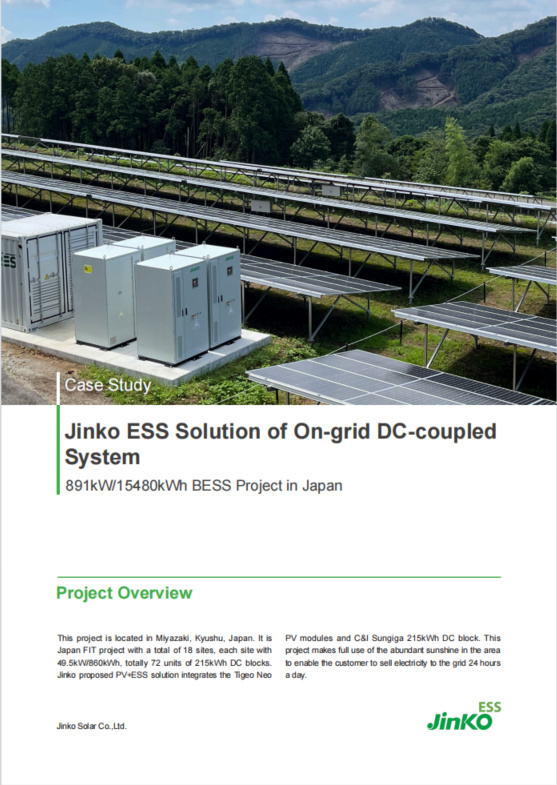
For industrial parks and commercial and industrial users, the solution combines energy storage with EMS monitoring and dispatch to enable tariff arbitrage, emergency backup and demand response, reducing electricity costs and increasing operational energy flexibility.
For industrial parks and commercial and industrial users, the solution combines energy storage with EMS monitoring and dispatch to enable tariff arbitrage, emergency backup and demand response, reducing electricity costs and increasing operational energy flexibility.
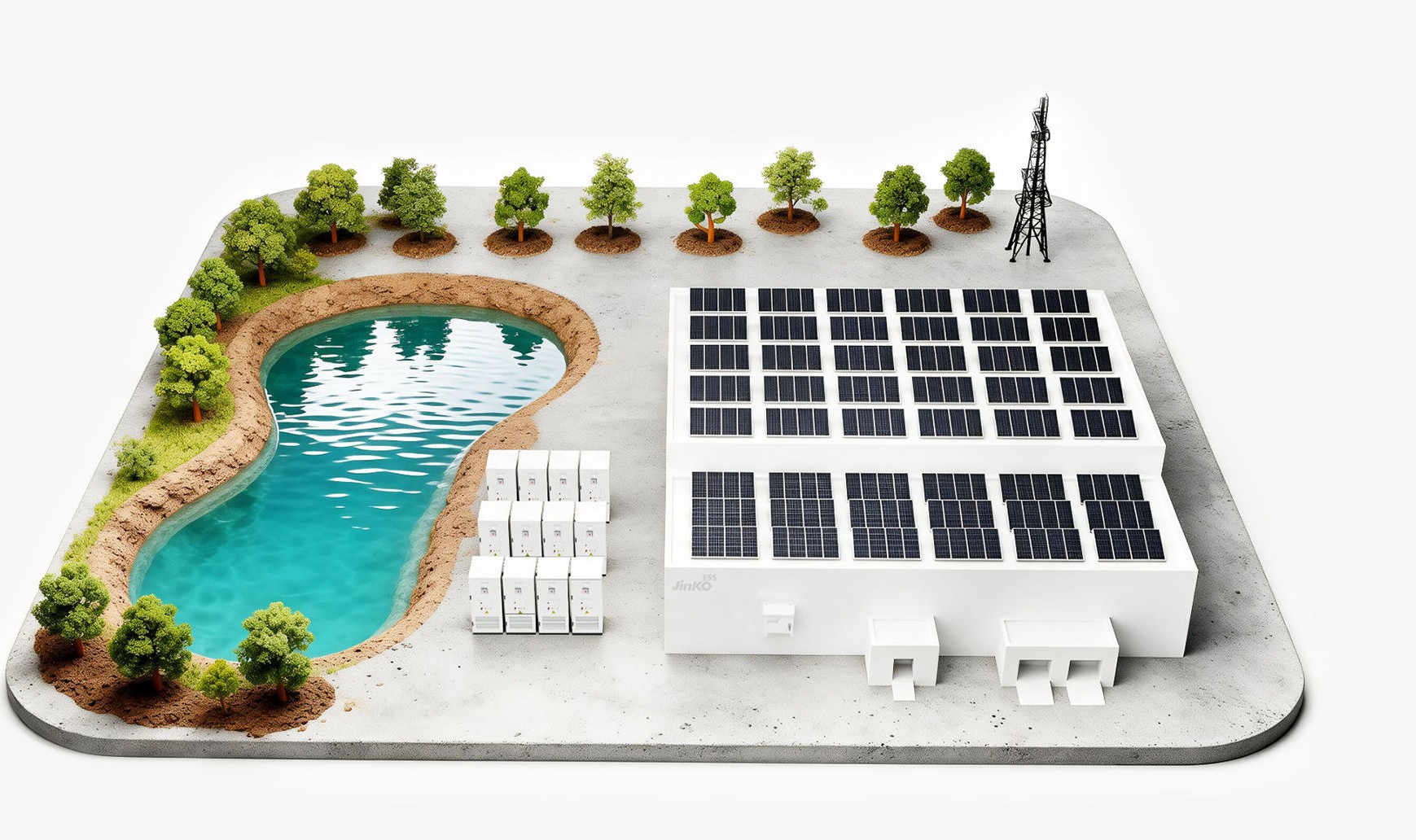

C&I energy storage systems featuring Jinko ESS-developed 314 Ah cells, precision liquid cooling with cell-to-cell temperature variation of ≤2°C, integrated perfluorohexanone and water-based fire protection, and a wide operating temperature range of -30°C to 55°C. Available as G2 (261 kWh) and G2 Plus (522 kWh), the modular architecture supports smooth multi-unit expansion. In grid-connected applications, the system efficiently delivers peak shaving, load shifting and demand management. Through the EMS, it can also connect to virtual power plant platforms and participate in grid dispatch, reducing demand charges while creating additional revenue streams.

EMS 1000 Plant-Level Energy Management System: in-house AI algorithms combine load forecasting with electricity-market strategies to optimise energy storage returns. Core functions include grid-connected/islanded transfer, zero-export control, capacity limit control, demand management, PV self-consumption, PV-storage coordination, time-scheduled power control, black start, peak shaving, load shifting and tariff arbitrage. A comprehensive protocol suite, including Modbus RTU/TCP, IEC 61850 GOOSE/MMS and DNP3.0, supports third-party equipment and grid-dispatch interfaces. Eight-level visual monitoring from equipment to plant is available through web, mobile app and large-screen interfaces, simplifying operations and maintenance.

Supports modular configurations with up to 12 units connected in parallel within a single cluster, flexibly meeting different capacity and application requirements.

Supports peak shaving, load shifting, demand management and maximum solar self-consumption. Optimised charging and discharging schedules improve energy efficiency and reduce total electricity costs.

Through Jinko EMS, the system can connect to virtual power plant platforms and participate in grid dispatch, enabling flexible use of storage assets and increasing their value.

Real-time data monitoring, system alarms and operating-status analysis improve O&M efficiency and system reliability.